
There are few things in my kitchen that bring a splash of color and a sense of calm quite like beets. After a long day of tending to my North Carolina garden, I find the best way to settle my mind is to prepare something fresh and nourishing. This Middle Eastern Beet Salad is a reminder that food doesn’t have to be complicated to be deeply healing. It is a simple, vibrant dish that connects my Southern roots with the heart of the Mediterranean diet.
Middle Eastern Beet Salad Ingredients You’ll Need
The beauty of this dish lies in its simplicity, requiring just a handful of real ingredients that love you back. You will need three medium beets, already cooked and diced into tender cubes. This saves you time and lets the natural sweetness of the root vegetable shine through.
For the dressing, I rely on two tablespoons of extra virgin olive oil and one tablespoon of fresh lemon juice. These two liquids balance each other perfectly, creating a light coating that clings to every piece without feeling heavy. Fresh parsley is essential here; you will need a full cup, chopped finely to disperse its bright, clean flavor throughout the mixture.
To round out the savory profile, grab one clove of garlic to mince and half a teaspoon of cumin. The cumin adds a warm, earthy note that pairs beautifully with the beets. Finally, half a cup of crumbled feta cheese brings a creamy, salty finish that ties everything together in this unforgettable Middle Eastern Beet Salad.
No-Cook Prep Time For Your Middle Eastern Beet Salad
Because this recipe requires no heat, the timing is incredibly friendly for busy afternoons or last-minute gatherings. The prep time is just fifteen minutes, and there is zero cook time involved, making it a true no-cook gem. You can have this dish ready to serve in a quarter of an hour.
You will only need basic equipment: a large mixing bowl, a sharp knife, and a cutting board. Since we aren’t using any stovetop or oven methods, the focus remains entirely on fresh preparation. This keeps the kitchen cool and the process peaceful, allowing you to enjoy the meditative act of chopping and mixing.
How To Make A Middle Eastern Beet Salad Step By Step
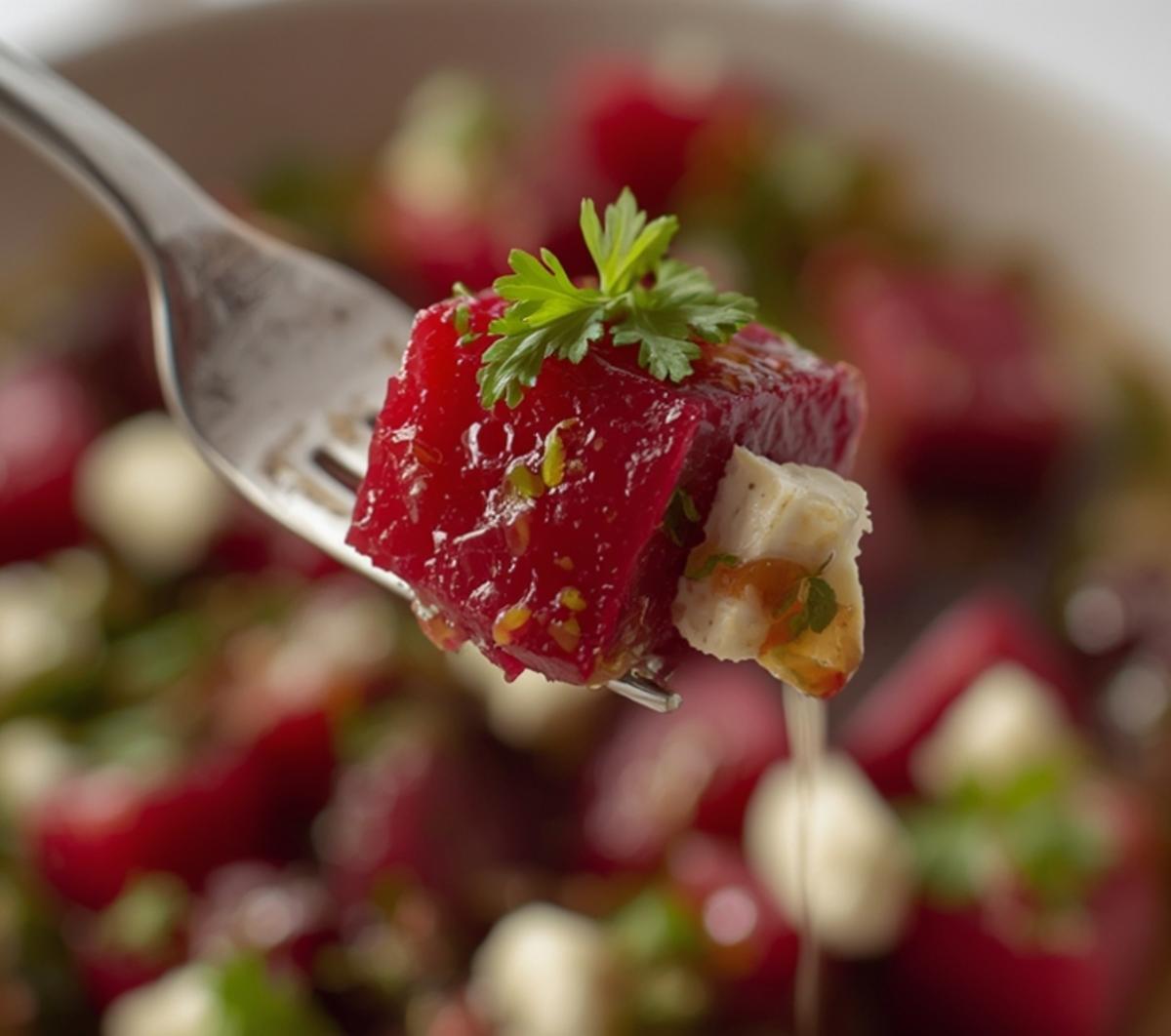
Begin by dicing the cooked beets into small cubes and placing them in your large mixing bowl. The knife glides through the tender beets, and I like to take a moment to admire that deep crimson color before moving on.
Next, add the chopped parsley, crumbled feta, minced garlic, cumin, olive oil, and lemon juice directly into the bowl with the beets. These ingredients form the soul of the dish, layering textures and flavors that complement one another naturally.
Toss everything gently until the ingredients are evenly coated and the dressing clings to the beets. I prefer using my hands or a large spoon to fold the mixture gently, ensuring the feta doesn’t get crushed too much.
Taste the salad and adjust the seasoning if needed, then chill it for ten minutes to let the flavors meld. This resting period is crucial for a salad like this, allowing the garlic and cumin to infuse the oil and lemon juice thoroughly.
Finally, serve your Middle Eastern Beet Salad immediately on a platter or individual plates. It serves as a refreshing side dish that pairs well with grilled proteins or stands alone as a light, satisfying lunch.
Why This Middle Eastern Beet Salad Fits Your Healthy Diet
This dish is a powerhouse of nutrition without feeling like medicine. The beets provide natural sweetness and fiber, while the olive oil offers heart-healthy fats that are central to the Mediterranean way of eating. It is a perfect example of a beet salad recipe that feels indulgent yet supports wellness.
I have found this to be one of the most versatile options for anyone following a Mediterranean lifestyle. It serves as an excellent mediterranean salad base, proving that healthy food can be vibrant and satisfying. Furthermore, this easy beet salad is a fantastic way to incorporate more vegetables into your diet without sacrificing flavor.
The combination of lemon juice and garlic helps with digestion, making this a gentle dish for the stomach. Whether you call it a feta salad or a middle eastern salad, the nutrient density remains high. For those avoiding roasted methods, this serves as a lighter alternative to a roasted beet salad, and it certainly qualifies as a healthy side dish for any meal.
Middle Eastern Beet Salad Variations And Add-Ins
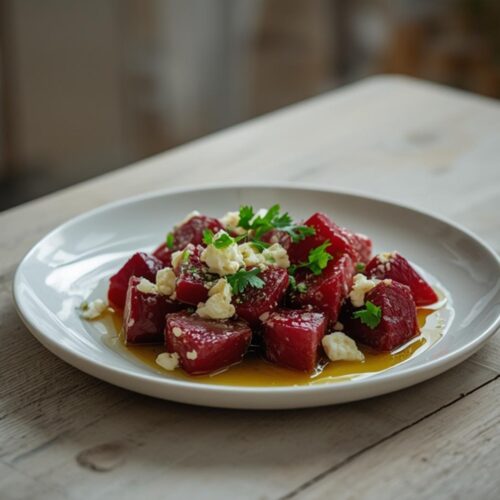
If you want to add a bit of crunch, consider tossing in a handful of toasted walnuts or pistachios. The nuttiness complements the earthiness of the beets and adds another layer of texture to the salad. This variation keeps the preparation time short and fits perfectly within the no-cook theme.
For a touch of sweetness, you might fold in some pomegranate seeds or orange segments. The burst of fruitiness pairs wonderfully with the salty feta and the tangy lemon dressing. This adaptation enhances the visual appeal of the Middle Eastern Beet Salad while introducing new antioxidants.
Common Middle Eastern Beet Salad Mistakes To Avoid
One common mistake is overdressing the salad; remember that the olive oil and lemon juice should coat the ingredients lightly, not pool at the bottom of the bowl. If you use too much liquid, the beets will lose their firm texture, and the feta may begin to dissolve prematurely.
Another pitfall is skipping the chilling step. While you can serve this immediately, allowing the salad to rest for the recommended ten minutes allows the flavors to marry properly. Without this pause, the garlic and cumin may taste disjointed rather than harmonious in your beet salad recipe.
Storing Leftover Middle Eastern Beet Salad Properly
Because this salad contains fresh herbs and feta cheese, it is best enjoyed the same day it is made. However, you can store leftovers in an airtight container in the refrigerator for up to two days. The colors may bleed slightly, but the flavor will remain delicious.
I do not recommend freezing this salad, as the texture of the beets and parsley will become mushy upon thawing. When you are ready to enjoy the leftovers, give the salad a gentle stir to redistribute the dressing. This ensures every bite of your Middle Eastern Beet Salad is just as tasty as the first.
Enjoy Your Fresh Middle Eastern Beet Salad Today
I hope this recipe finds its way to your table and brings a little peace to your kitchen, just as it has to mine. Cooking for my daughter and grandsons has taught me that the simplest dishes often carry the most love. This Middle Eastern Beet Salad is more than just a side; it is a celebration of fresh ingredients and the time we take to prepare them.
Gather your beets and herbs, and trust in the process. You don’t need fancy techniques to create something nourishing and beautiful. Serve this salad with a smile, and let the vibrant flavors remind you of the joy found in simple, wholesome cooking.
Nutrition Facts (Per Serving)
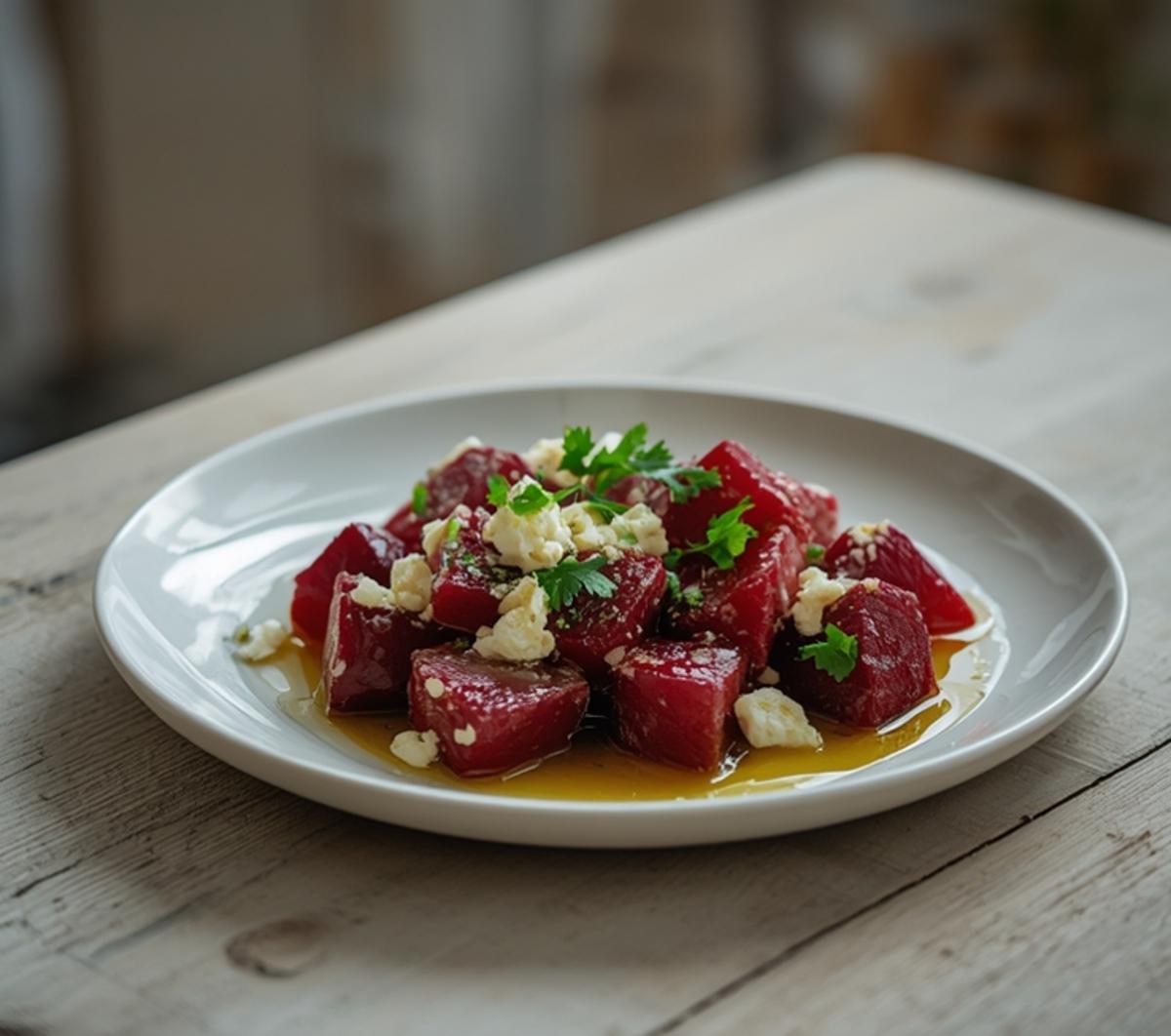
Zesty Middle Eastern Beet Salad With Feta And Herbs
Ingredients
Equipment
Method
- Dice the cooked beets into small cubes and place them in a large mixing bowl.
- Add chopped parsley, crumbled feta, minced garlic, cumin, olive oil, and lemon juice.
- Toss gently until everything is evenly coated and the dressing clings to the beets.
- Taste and adjust seasoning, then chill for 10 minutes for flavors to meld.
- Serve immediately on a platter or individual plates for a refreshing side dish.
Frequently Asked Questions
Can I use raw beets instead of cooked for this Middle Eastern beet salad?
You can use raw beets, but they will be firmer and more pungent. Grate them finely to soften the texture. Roasting or boiling beets first is recommended for a sweeter, milder flavor.
How long does leftover Middle Eastern beet salad keep in the fridge?
Store leftovers in an airtight container for up to 3 days. The flavors continue to develop, but the parsley may wilt slightly. Drain any excess liquid before serving.
Can I make this salad ahead of time for a party?
Yes, this salad is ideal for make-ahead prep. Assemble it a day in advance and keep it chilled. Add the fresh parsley just before serving to maintain its crispness.
What is the best way to reheat if I prefer a warm salad?
This is a no-cook salad, but you can gently warm the beets before mixing. Avoid reheating the dressed salad to keep the feta from melting. Serve at room temperature for best texture.
What proteins pair well with this Middle Eastern beet salad?
It pairs beautifully with grilled chicken, lamb, or falafel. The earthy beets complement the smoky flavors of Mediterranean proteins. Add a side of hummus for a complete meal.
Have more questions? Leave a comment below and we will help you out!